
Water Quality That Protects Fixtures and Appliances
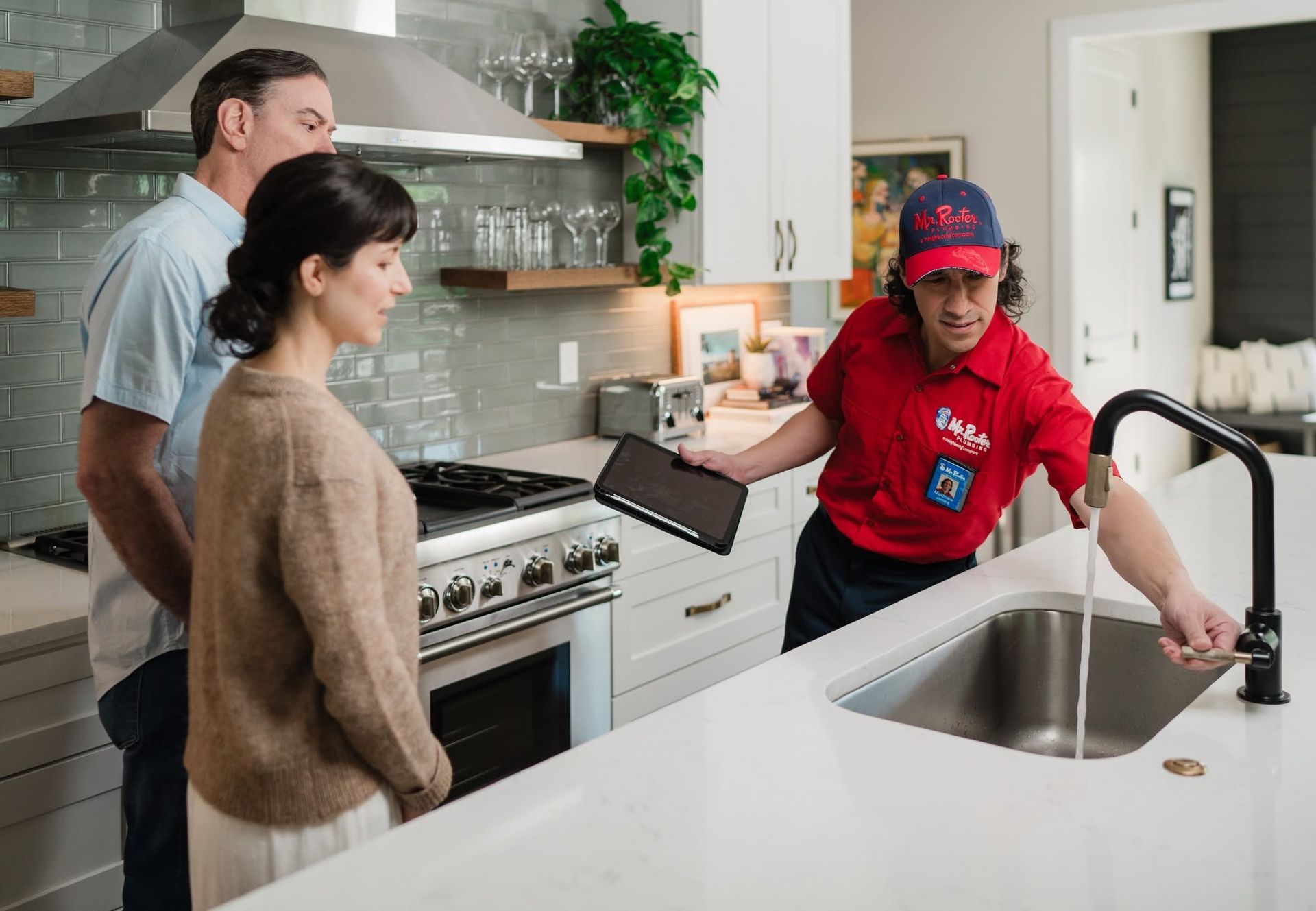
Water Filters and Softeners in Muskegon for property owners addressing hard water concerns and improving household or commercial water quality
Michigan's groundwater carries dissolved minerals—primarily calcium and magnesium—that create hardness, leaving white scale on faucets, reducing soap lather, and shortening the lifespan of water heaters and other appliances. Water filtration and softening equipment addresses these concerns by removing or neutralizing the minerals and contaminants that affect water usability and system performance. Mr. Rooter Plumbing - Muskegon provides water filter and softener services for residential and commercial properties in Muskegon where hard water causes visible buildup, increases cleaning effort, and accelerates wear on plumbing components.
Water treatment systems work by passing incoming water through media that captures particles, neutralizes hardness minerals, or both. Softeners use ion exchange resin that trades sodium or potassium ions for calcium and magnesium, preventing scale formation throughout the property's plumbing. Filters remove sediment, chlorine taste, and other dissolved substances depending on the media type installed. Selecting the right system depends on water test results that show what's present in your supply and at what concentration.
Schedule a consultation to discuss water treatment options suited to your property's water quality and usage patterns.
What You Notice Once Treatment Systems Are Installed
Water softening produces immediate, observable changes: soap lathers easily without requiring excessive amounts, glassware and dishes dry without spotting, and shower doors stay clearer longer because mineral deposits no longer form as water evaporates. Inside the plumbing system, scale stops accumulating on fixture aerators, showerheads maintain full spray pressure without clogging, and water heater elements remain free of the crusty buildup that insulates them from the water they're trying to heat—reducing efficiency and shortening equipment life.
Filtration improves taste by removing chlorine and other treatment chemicals added by municipal suppliers, and it reduces sediment that can cloud water or settle in appliance valves. You'll notice that ice cubes are clearer, coffee and tea taste cleaner, and you no longer see rust-colored staining from iron or manganese in toilets and sinks.
Water treatment systems require periodic maintenance—softeners need salt replenishment and occasional resin cleaning, while filters have cartridges that must be replaced on schedules determined by water volume and contamination levels. System sizing also matters: undersized units can't keep up with peak demand and allow untreated water to pass through during heavy use periods.
Questions Before Starting Your Project
Water treatment equipment choices depend on what's in your water and how much improvement you're seeking, and understanding these factors helps you make informed decisions.
What makes water "hard" and how is hardness measured?
Hardness refers to dissolved calcium and magnesium content, measured in grains per gallon—water above seven grains is considered hard enough to cause noticeable scale buildup and soap performance issues.
How does a water softener remove hardness minerals?
Softeners use resin beads charged with sodium or potassium ions that attract and capture calcium and magnesium as water passes through, then periodically regenerate by flushing the captured minerals to drain and recharging the resin with fresh sodium from the brine tank.
Why do some properties need both filtration and softening?
Softening addresses hardness minerals but doesn't remove chlorine, sediment, or dissolved iron—properties with multiple water quality issues benefit from combining treatment technologies that each target specific contaminants.
When should water be tested before choosing treatment equipment?
Testing identifies which contaminants are present and at what levels, allowing system selection tailored to your actual water composition rather than guessing based on generic regional assumptions.
What water quality issues are specific to Muskegon-area properties?
Well water in rural Muskegon County often contains elevated iron and manganese that stain fixtures, while municipal supplies may have chlorine taste that many property owners prefer to reduce, and groundwater throughout the region generally ranges from moderately hard to very hard depending on the aquifer depth and geology.
Mr. Rooter Plumbing - Muskegon helps property owners throughout Muskegon improve water quality with filtration and softening systems suited to local water conditions. Call (231) 903-6029 to arrange a water treatment consultation and explore your options.